Introduction to Generative AI
Artificial intelligence has changed the way people interact with technology, and Generative AI is one of the biggest advancements in this field. Unlike traditional AI systems that mainly analyze information and make predictions, Generative AI can create new content, ideas, and solutions.
From generating text and images to assisting with software development, AI is helping individuals and businesses improve creativity, productivity, and efficiency. Today, writers, developers, marketers, students, and organizations are adopting AI-powered tools to complete tasks faster and achieve better results.
The growth of AI shows how artificial intelligence is moving from simple automation toward creative collaboration between humans and machines.
What Is Generative AI?
Generative AI is a branch of artificial intelligence that enables machines to create new content by learning patterns from existing data. It uses advanced technologies such as machine learning, deep learning, and neural networks to understand information and produce meaningful outputs.
Unlike traditional AI, which focuses on analyzing data or following fixed instructions, Generative AI can generate original content based on user input.
For example, Generative AI tools can create:
- Blog articles and marketing content
- Digital images and designs
- Videos and animations
- Computer programming code
- Reports and summaries
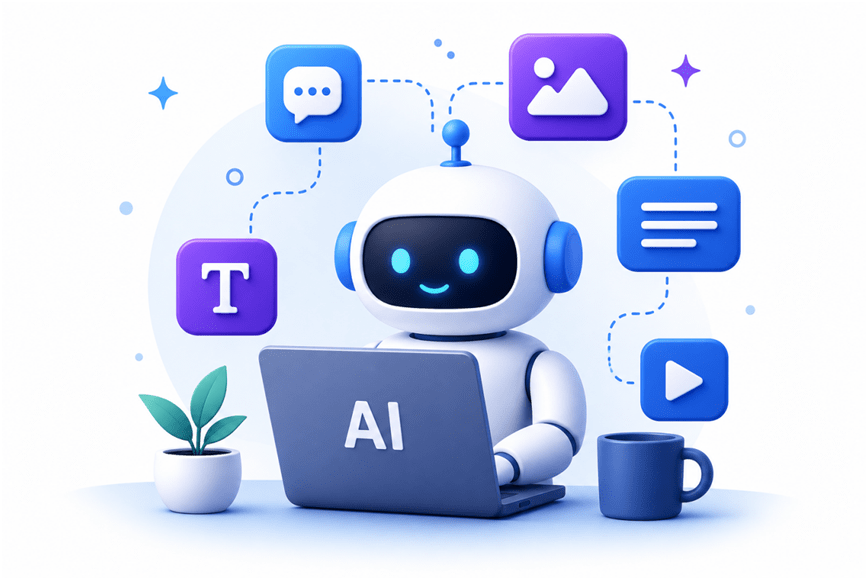
This ability makes Generative AI a powerful technology for creative work, automation, and problem-solving.
How Does Generative AI Work?
Generative AI works by training artificial intelligence models using large amounts of data. During the training process, these models learn patterns, language structures, visual elements, and relationships within the data.
When a user provides a prompt, the AI system analyzes the request and generates a suitable response based on its previous learning.
For example, a user can provide a simple instruction like “write a product description” or “create an image of a futuristic city,” and the AI model can generate relevant results within seconds.
Some important technologies behind Generative AI include:
Machine Learning
Machine learning allows AI systems to learn from data and improve their performance over time without being directly programmed for every task.
Deep Learning
Deep learning uses complex neural networks to process large amounts of information and generate accurate outputs.
Natural Language Processing
Natural language processing helps AI understand human language and communicate with users in a natural way.
Applications of Generative AI
AI is being used in many industries because of its ability to improve efficiency and innovation.
Content Creation
Content creators and marketers use AI to generate blog ideas, social media posts, advertisements, and product descriptions. It helps reduce the time required for content production while providing creative suggestions.
Software Development
Developers use AI tools to write code, identify errors, and improve programming workflows. AI coding assistants help developers solve problems faster and increase productivity.
Education
In education, AI supports personalized learning. Students can use AI tools for explanations, research assistance, and study materials. Teachers can also create lessons and educational resources more efficiently.
Business Automation
Businesses use AI for customer support, workflow automation, data analysis, and decision-making. AI-powered assistants help companies improve customer experiences and operational efficiency.
Benefits of Generative AI
The increasing use of Generative AI provides several advantages.
Improved Productivity
Generative AI helps automate repetitive tasks, allowing people to focus on more valuable and creative activities.
Faster Content Creation
AI tools can generate text, images, and other digital content quickly, saving significant time for professionals.
Enhanced Creativity
Instead of replacing creativity, AI supports human imagination by providing new ideas, suggestions, and possibilities.
Better Efficiency
Organizations can use AI automation to improve workflows, reduce manual effort, and complete tasks more effectively.
Challenges of Generative AI
Although AI provides many benefits, it also comes with certain challenges.
One major concern is accuracy. AI-generated content may sometimes include incorrect information, so human review is necessary before using the output.
Data privacy is another important issue because AI systems depend on large amounts of information. Protecting personal and sensitive data is essential.
There are also ethical concerns related to copyright, originality, and responsible AI usage. Proper guidelines are required to ensure that Generative AI is used safely and effectively.
The Future of Generative AI
The future of ai is highly promising. As AI technology continues to improve, it will become an important part of many industries, including healthcare, education, entertainment, and software development.
In the coming years, ai will continue to work as a supportive technology that enhances human abilities rather than completely replacing human involvement.
The combination of human creativity and artificial intelligence will create new opportunities, improve productivity, and transform the way people solve problems.
Conclusion
AI is transforming the modern digital world by changing how people create, communicate, and work with technology. Its ability to generate content, automate tasks, and provide intelligent assistance makes it one of the most important technologies today.
From businesses and education to software development and creative industries, ai is creating new possibilities and improving efficiency.
As this technology continues to evolve, understanding and using ai responsibly will help individuals and organizations prepare for the future of artificial intelligence.