AI in digital marketing has changed more in the last two years than it did in the previous ten. The reason is simple. Artificial Intelligence is no longer optional. Businesses that use AI correctly are getting more leads at a lower cost. Businesses that ignore it are struggling to keep up.
This article explains what AI in digital marketing really means, how it works in real business situations, and how you can start using it today without technical knowledge.
What Is AI in Digital Marketing?
AI in digital marketing means using artificial intelligence tools to analyze data, predict user behavior, automate tasks, and improve marketing performance.
This includes:
- Writing and optimizing content
- Automating ad targeting and bidding
- Improving lead quality
- Personalizing customer experiences
- Predicting what users are likely to do next
AI does not replace strategy. It improves execution. If your basics are weak, AI will not save you. That is the truth most people avoid saying.
Why AI Matters for Businesses in 2026
Consumer behavior is faster and more complex now. Manual marketing cannot keep up.
AI matters because it:
- Saves time on repetitive tasks
- Reduces ad spend wastage
- Improves targeting accuracy
- Increases conversion rates
- Helps small teams compete with big brands
Businesses still doing everything manually are already behind. In 2026, the gap will only increase.
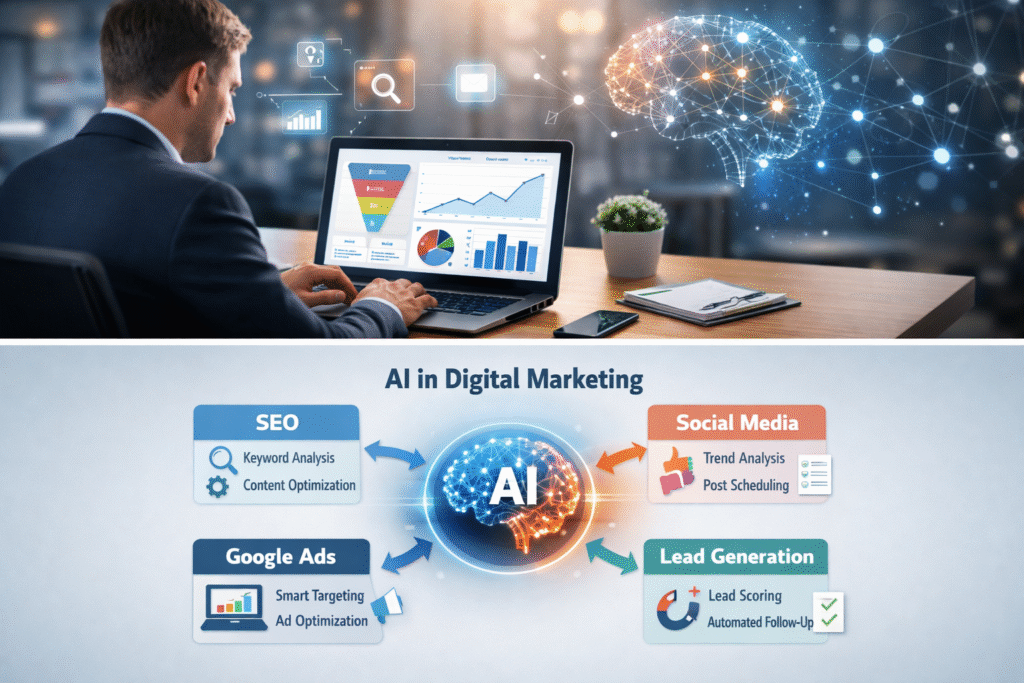
How AI Improves Lead Generation
Lead generation is where AI delivers the strongest results.
1. Better Audience Targeting
AI analyzes user behavior, interests, and intent signals. This means ads reach people who are more likely to convert, not random users.
2. Smarter Ad Optimization
AI tools adjust bids, placements, and creatives automatically based on performance data. This reduces cost per lead and improves ROI.
3. High-Converting Content
AI helps identify what type of content users engage with. It suggests headlines, formats, and keywords that actually work.
4. Lead Qualification
AI filters low-quality leads before they reach your sales team. This saves time and improves closing rates.
If your leads are poor quality, your problem is not sales. It is marketing.
AI Tools Used in Digital Marketing
You do not need dozens of tools. You need the right ones.
AI for Content and SEO
AI helps with:
- Keyword research
- Content outlines
- On-page optimization
- Content updates for ranking improvement
Use AI as an assistant, not as a replacement for thinking. Blindly publishing AI-written content without editing will hurt your brand.

AI for Google Ads and Meta Ads
AI improves:
- Audience targeting
- Automated bidding
- Creative testing
- Budget allocation
This is why many ads perform better today even with higher competition. The system is smarter.
AI for Email and WhatsApp Marketing
AI helps with:
- Subject line testing
- Send-time optimization
- Message personalization
- Follow-up automation
Generic broadcast messages no longer work. Personalization is mandatory.
AI for Social Media Marketing
AI tools help marketers:
- Identify trending content formats
- Schedule posts at optimal times
- Analyze engagement patterns
- Repurpose content efficiently
If your social media growth is stagnant, your content decisions are likely based on guesswork. AI removes that guesswork.
Common Mistakes Businesses Make With AI in Digital Marketing
This section matters. Most failures happen here.
1. Expecting AI to Replace Strategy
AI does not fix poor positioning, weak offers, or bad landing pages.
2. Using Too Many Tools
More tools do not mean better results. Most businesses waste money here.
3. Publishing Unedited AI Content
Search engines and users can tell. Quality still matters.
4. Ignoring Data
AI works best when you feed it correct data. Garbage data leads to garbage results.
If AI is not working for you, look at how you are using it. Not at the tool.
Is AI in Digital Marketing Replacing Digital Marketers?
No. It is replacing lazy marketers.
AI AI in Digital Marketing replaces repetitive execution, not thinking, creativity, or strategy. Marketers who understand psychology, funnels, and data will become more valuable, not less.
Businesses that rely only on AI without human judgment will struggle.
How Small Businesses Can Start Using AI Today
You do not need a big budget.
Start with:
- AI-based keyword research for your website
- AI-supported ad optimization in Google or Meta
- AI tools for email follow-ups
- AI-assisted content planning
Focus on one area first. Measure results. Then expand.
Final Thoughts
AI in digital marketing is no longer a trend. It is the new standard.
Businesses that adopt AI with clear strategy will get more leads, better conversions, and stronger brand visibility. Businesses that ignore it will spend more and get less.
The choice is simple.